A message from our President and Executive Director
At the start of the year, our forecast for 2025 and beyond looked very different to the situation we are all faced with now.
Despite this incredibly difficult environment, created by devastating funding cuts, geopolitical turmoil and a fatal earthquake, everyone across The Union has shown incredible perseverance, resilience and dedication. This commitment to our vision – a healthier world for all, free of tuberculosis and lung disease – has been truly inspiring and resulted in fantastic achievements that are moving the needle in the fight against tuberculosis (TB) and lung disease.
Therefore, it is important to take a moment to reflect on everything we have accomplished in 2025. Be sure to read through some of the highlights below.
We would like to say a massive thank you all our members, colleagues and partners for everything you do. Through your tireless dedication, we will achieve our goal.
Global health is in a troubling moment. One we can only weather by remaining united and steadfast in our shared mission to improve health for everyone, ensuring no one is left behind.
Our power, as individuals and organisations acting alone, to affect change is limited, but collectively we do have power. We must organise our voices and actions to affect change that matters most. Together, we do have a voice, and we must make it heard in 2026.
Best wishes
Cassandra and Guy
Standing with our global health community partners
As we’ve expressed above, it is essential that we make our united voice count. In 2025, we stood with our partners to shine a light on key issues. Firstly, we shared the global health community’s deep concerns regarding the US Government's orders to halt global aid funding and withdraw from the World Health Organization (WHO). To back up these concerns with real world evidence, we rapidly conducted a survey of National TB Programmes in Africa – 65% declared the stoppage has already negatively affected TB care and prevention.
In May, as part of the Forum of International Respiratory Societies, we launched a campaign to improve access to inhaled medicines for the hundreds of millions living with chronic lung diseases across the world. A pivotal moment for this movement was the World Health Assembly’s adoption of the Integrated Lung Health Resolution.
Later in the year, Cassandra represented The Union at the UN General Assembly and High-Level Meeting on non-communicable diseases. Cassandra flew the flag for lung health and joined the NCD Alliance and other partners in pushing for stronger commitments to change the trajectory on non-communicable diseases.
The Union is passionate about providing affected communities with a platform to be heard, however, more needs to be done to address the gap in meaningfully engaging communities in research. Therefore, The Union joined a large multi-author paper addressing this issue.
Bringing the tobacco control community back together (after seven years apart)
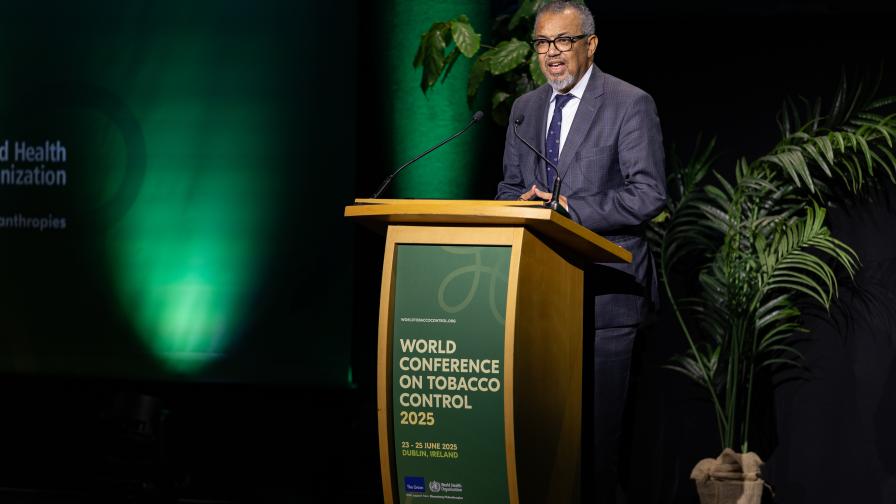
Organised by The Union, with support from Bloomberg Philanthropies and the WHO, the World Conference on Tobacco Control 2025, brought together 1,300 delegates from around the globe for three days of collaboration, inspiration and action.
Held in Dublin, Ireland from 23–25 June, the conference featured keynote speeches from Dr Tedros Adhanom Ghebreyesus, Director-General of the WHO and Taoiseach of Ireland Micheál Martin.
Over 650 presenters contributed to an engaging exchange of research, policy and practice aimed at advancing global tobacco control efforts. The conference was concluded with the signing of the Dublin Declaration, a powerful call to action on behalf of the delegates reaffirming the urgency of global tobacco control efforts.
Building on the momentum of Dublin
On World No Tobacco Day – 31 May 2025, The Union joined global civil society organisations in urging countries to accelerate the implementation of the WHO Framework Convention on Tobacco Control (FCTC). The call was backed up by the endorsement of a new report that shone a light on global disruptions and tobacco industry interference that have compromised FCTC implementation.
In November (while many of us attended the Union World Conference on Lung Health), Les Hagen, North America Lead of The Union Tobacco Control Section, attend the WHO FCTC’s Conference of the Parties. Les took part in a side event, 'Lung Health Resolution, Aligning with WHO FCTC for an Integrated Approach', co-hosted by Malaysia, Union for International Cancer Control (UICC) and The Union.
Our Training and Education Department also launched ‘Tobacco – History, Consequences, and Cessation’ a new, free online course in French. Developed by leading public health experts, this course is designed for healthcare professionals and stakeholders engaged in tobacco control, with a particular focus on low- and middle-income countries.
New Union leadership
In 2025, following a membership vote, Dr Bess Miller and Prof Steve Graham were elected as members of the Board of Directors. We would like to take this opportunity to thank Dr Edward Nardell and Dr Robert Horsburgh for their tireless commitment to The Union.
We were also delighted to announce the appointment of a new Chief Scientific Officer, Dr Kavindhran Velen. Kavi is a microbiologist and epidemiologist with over 18 years of experience in public and global health, spanning research, policy and implementation across the private, government, and non-governmental organisation sectors.
Being the pathfinders that lung health needs
In 2025, we continued to push for a focus on evidence-based activities that will break the chain of transmission to end TB in high-burden settings – finding and treating everyone with TB. It is a profound injustice that millions worldwide remain at risk of tuberculosis, as Kavi stated in The Guardian’s recent antimicrobial resistance campaign.
We have also been the pathfinders through our actions. Our Maternal and Child TB Working Group has driven a call for the acceleration of research to end TB in pregnant and lactating women, which significantly contributed to the publication of a WHO call to action and consensus statement about prioritising pregnant and lactating women in TB research. This is testament to the determination, resilience and world leading expertise of our membership.
Strengthening India’s TB response
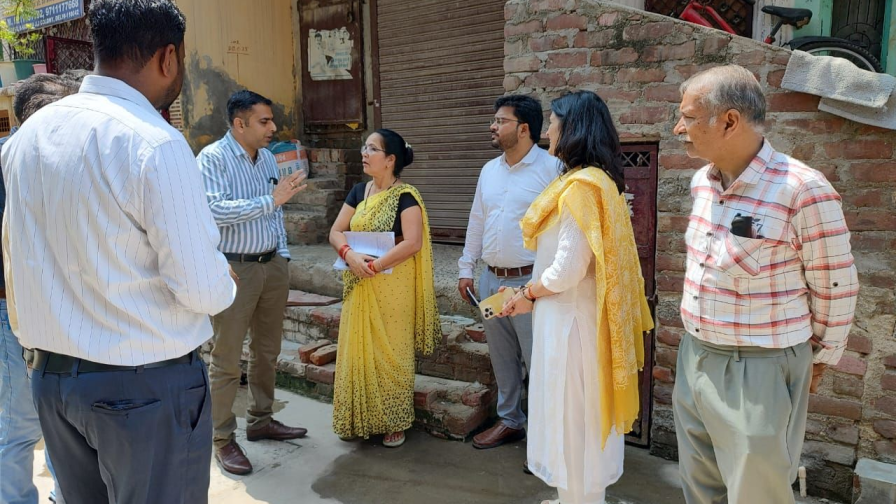
Since 2021, The Union led the implementation of iDEFEAT TB – Institutional Strengthening to Accelerate Actions for Tuberculosis (TB) and Drug-Resistant TB (DR-TB) in India, in close collaboration with the Ministry of Health and Family Welfare, Government of India.
The Unfortunately, the project came to an end this year due to the withdrawal of US Government funding. Despite this, iDEFEAT TB has successfully embedded technical expertise within the countries TB response and enhancing its performance at every level. Here are just some of the achievements:
-
Enabled the screening of over five million people and testing of over 200,000 people for early detection and prevention of TB.
-
Strengthened more than 600 government TB institutions, building a nationwide foundation of quality care.
-
Developed and implemented over 60 national tools and frameworks to transform knowledge into practice.
-
Trained over 18,000 national TB programme staff through modernised training strategies embedded into the national training architecture.
-
Supported the adoption of AI-assisted X-rays, whole genome sequencing and shorter drug-resistant TB regimens.
-
Launched an urban health initiative to improve active screening in densely populated areas – embedding TB care within local health systems.
Driving evidence-based TB innovation and research
In 2025, The Union showcased our ability to lead ground-breaking research studies and TB control projects, including:
-
A study using AI modelling to effectively identify areas with a high burden of TB in Central African Republic, that were previously unknown – an approach that could be scaled and used in other low-resource settings.
-
A multi-country study aiming to improve the retention of people in different phases of care for TB prevention across South-East Asia.
-
Also in Central African Republic, The Union launched a project to evaluate the effectiveness of a new strategy to find more people with undiagnosed TB. A first in Francophone Africa.
-
An evaluation across TB clinics in Uganda showing promising results in identifying and treating household contacts of people with pulmonary TB.
The power of education in action
Through our world class training and education activities, The Union has equipped frontline healthcare professionals with the vital skills to better manage and prevent the suffering of those with TB.
In Lesotho, we piloted a new curriculum on the management of child and adolescent TB for healthcare workers, in collaboration with U.S. Centers for Disease Control and Prevention (CDC). Since the training was conducted, Lesotho observed an increase in the proportion of children diagnosed with TB.
In response to the global funding cuts, our Training and Education Department launched several free online courses, including:
-
Management of child and adolescent TB, with supporting training materials, for healthcare workers in resource-limited and high TB burden settings
-
Drug-resistant TB: From clinical to programmatic, for clinicians and programme managers to improve the management of drug-resistant TB
-
Chest radiograph interpretation for TB diagnosis, strengthens skills in interpreting chest X-rays for TB in adults, children, and people living with HIV
Enhancing knowledge through greater access
IJTLD Open has gone from strength to strength, with more manuscripts published across an increased range of article categories. The scope of the journal has also expanded to include non-tuberculous mycobacteria, and viral and fungal respiratory diseases. The journal’s value to the community has also been recognised with indexing by the Directory of Open Access Journals and Scopus.
Inspiring resilience after the Myanmar earthquake
On Friday 28 March, Myanmar was devastated by a 7.7 magnitude earthquake that killed thousands of people, destroyed many buildings and left the country without vital infrastructure.
While The Union Office in Mandalay, the epicentre of the earthquake, was damaged; fortunately, only two of our nearly 150 colleagues suffered minor injuries. However, many of our colleagues and their families had serious damage to their homes and were displaced. Several staff took refuge within our office compound.
Despite their on-going personnel challenges, our Myanmar team’s commitment to continuing essential TB and lung disease programmes amid such adversity is unwavering. Alongside other humanitarian actors, our colleagues worked tirelessly to provide emergency medical care, improve water and sanitation conditions, and offer psychological support to trauma victims.
Incredibly, just 14 weeks after the earthquake hit, our TB and HIV programmes were once again reaching pre-earthquake levels of service delivery. A truly remarkable achievement by our inspirational team in Myanmar.
We strongly recommend that you read the stories of resilience shared by our colleagues, volunteers and people we serve.

Uniting the lung health community in Copenhagen and New Delhi
Despite devastating global funding cuts and geopolitical turmoil, over 3,000 lung health experts from 120 countries took part in the Union World Conference on Lung Health 2025 in Copenhagen, Denmark.
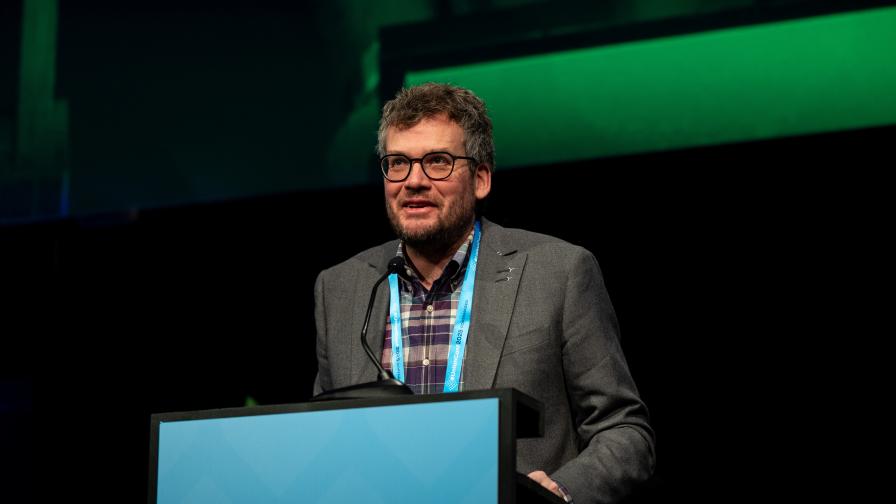
A powerful feature of this year’s Union Conference was the inclusion of four authors who are breathing new life into TB advocacy, with global health advocate and bestselling author, John Green delivering an inspiring keynote speech.
Once again, Community Connect continued to grow as a key element of the conference – becoming a vital platform for the affected community and civil society to share experiences and develop person-centred solutions for lung health.
In March, The Union jointly organised the ‘India Innovation Summit – Pioneering solutions to End TB’, with the Department of Health Research and Indian Council of Medical Research (ICMR), Central TB Division and Gates Foundation.
The summit brought together more than 1,400 key stakeholders from various sectors to accelerate the progress toward ending TB in India. A key focus of this pivotal event was to identify innovations with potential for large-scale implementation and link them with Government initiatives for further development.