Scientific Sections
As a member, you can join and participate in member group activities.
TUBERCULOSIS
The tuberculosis (TB) section is the largest section of The Union, and brings together a diverse group of members who share a primary interest in TB prevention and care, and in persons and communities affected by TB worldwide.
TOBACCO CONTROL
The Tobacco Control Section comprises Union members who share common professional interests in creating a tobacco-free world through active collaboration, dissemination of ideas, and demonstration of leadership in policy, practice, and scientific research.
ADULT AND CHILD LUNG HEALTH
The Adult and Child Lung Health Section includes the following areas of interest:
- Adult Lung Health: including pneumonia, asthma, COPD, air pollution, occupational lung disease and non-communicable diseases (NCDs)
- Child Lung Health: Childhood TB, HIV, childhood pneumonia, other child lung health issues and child lung-related NCDs.
The section is working with other international organisations (such as the WHO and Global Asthma Network) to provide joined-up advocacy for asthma and chronic lung disease.
HIV
The HIV section primarily focuses on TB in the context of HIV, individuals who are co-infected with TB and HIV, and individuals with TB who also have other co-morbidities and conditions, including diabetes, hepatitis and drug and alcohol misuse.
Scientific Sub-sections
Nurses and Allied Professionals
The Nurses and Allied Professionals Sub-section (NAPs) represents nurses, health educators and other allied professionals dedicated to ending TB. A strength of the group and its members is the diversity of knowledge, skills and expertise within their global community of practice.
Zoonotic TB
The Zoonotic TB (zTB) Sub-section aims to understand the dynamics of zTB and obtain global recognition for the immediate need to control this disease. Thus, helping to coordinate efforts will provide a platform for collaboration, global advocacy, and support to all involved sectors in the prevention and control of zTB and related issues.
TB Bacteriology and Immunology
The TB Bacteriology and Immunology Sub-Section advocates for the importance of laboratory-related research and implementation to detect TB infection and determine drug susceptibility in support of the End TB strategy.
Union Members share their thoughts on the benefits of being a part of a specific scientific section within The Union.
It's the one place in the science community where we can come together and talk about tuberculosis.

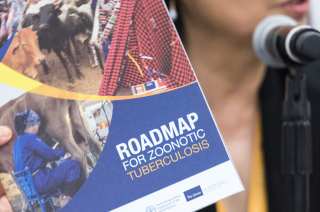
“The Sub-section has taken a leading role in the prevention and control of zoonotic TB and related issues. At the Union World Conference, we launched the The Road Map for Zoonotic TB, a policy document that addressed the major health and economic impacts of this disease, prioritising collation of scientific evidence, reducing transmission at the animal-human interface, and strengthening intersectoral and collaborative approaches.”
Former Chair of The Union’s Zoonotic TB Sub-section, Prof Simeon Cadmus, Professor at the Centre for Control and Prevention of Zoonoses at the University of Ibadan, Nigeria.
Working Groups
Members are invited to join any of our working groups.
Tuberculosis scientific section working groups
TB and Migration
The TB and Migration working group focuses on tuberculosis among migrants, including epidemiology and risk factors in countries of origin, during transit and after arrival in countries of destination, and during their potential return. The group supports this emerging and under-researched field through webinars, symposia, conferences and scientific papers and has a role in informing policy within The Union.
TB Infection Control
The TB Infection Control working group focuses on the monitoring and evaluation of tuberculosis infection controls in health facilities and health systems.
Global Indigenous Stop TB Initiative
The Global Indigenous Stop TB Initiative (GISI) working group aims to increase Indigenous Peoples’ involvement in and control over TB policy and programming.
TB and Mental Health
The goal of the TB and Mental Health working group is to establish a community of practitioners and researchers to advance attention to mental illnesses and substance abuse in the context of tuberculosis care and control.
Drug-Resistant TB
The Drug-Resistant Tuberculosis (DR-TB) working group's goal is to gather and share information to help accelerate the scale-up of evidence-based DR-TB policy and practice. The group surveys members at regular intervals to get a good picture of how MDR-TB treatment rollout is progressing in various regions.
TB and Ethics
The TB and Ethics working group aims to encourage broader engagement with ethical issues in tuberculosis research and practice. The group promotes reflective and practical consideration of ethical issues within the TB community.
TB Multimorbidity
TB-Multimorbidity (TBMM) Working Group was formed to set up a community of practice in tuberculosis-multimorbidity, aiming to develop and promote strategic research, awareness, advocacy and policy agenda and initiatives on physical and mental multimorbidity in Tuberculosis care.
TB Undernutrition
The TB Undernutrition working group was established to highlight the importance of undernutrition as a risk factor for TB disease. According to the Global Tuberculosis report 2021, Undernutrition is the leading risk factor for TB with a population attributable fraction of 19% which is higher than human-immunodeficiency virus (7.6%) and diabetes (3.1%).
TB in Prisons
Globally, people deprived of liberty (PDL) have extremely high rates of tuberculosis, often more than 10 times greater than the general population. This working group seeks to raise awareness about TB among PDL and identify and share best practices and guidance to improve care and prevention of TB in prisons.
Gender Equity in TB
The Gender Equity in TB working group was established to mobilise knowledge on the role of gender in TB for awareness and action in TB prevention and care through evidence-informed policy and practice.
Smoke Free-TB
The Smoke Free-TB working group works to integrate effective tobacco control strategies into TB programs by fostering collaboration, building capacity, and promoting policy and practice changes that reduce the burden of smoking-related TB outcomes.
Social Protection for TB and Lung Health
Over the past decade, social protection has evolved from a peripheral consideration in tuberculosis (TB) prevention and care to a central pillar of global TB elimination efforts. The 2015 WHO End TB Strategy recognized that ending TB requires action beyond biomedical interventions alone, including efforts to address the social and economic conditions that drive vulnerability, undernutrition, impede access to care, and contribute to poor treatment outcomes. This vision was reaffirmed in the 2023 United Nations High-Level Meeting Political Declaration on Tuberculosis, which committed to universal access to a health and social benefits package for all people with TB by 2027. At the same time, a growing body of implementation research, randomized trials, and operational experience has demonstrated the value of interventions ranging from cash transfers and nutritional support to transportation assistance, employment protections, and integrated social services on reducing TB incidence, improving treatment success and reducing catastrophic costs. Together, these policy commitments and scientific advances have established social protection as an essential component of equitable, person-centered TB prevention and care.
Tobacco Control Working Group:
MPOWER Research on Tobacco Control
The MPOWER Research Group on Tobacco Control was formed to scale-up global tobacco control research for feeding into policies at the regional/country level. The group focuses on systematically mapping, identifying and prioritising research (in terms of national priority) needed to implement the WHO Framework Convention on Tobacco Control and MPOWER in LMICs.
Adult and Child Lung Health working groups:
Post-TB Lung Disorders
The Post Tuberculosis Lung Disorders working group conducts research, investigates strategies and raises awareness amongst healthcare workers and policy makers on post-TB lung health.
Maternal and Child Tuberculosis
The Maternal and Child Tuberculosis working group serve as a community of practice for investigators, program managers, and advocacy groups who are working to improve TB prevention, detection, and treatment for women and children by integrating TB and TB/HIV services in maternal and child health settings.
Chronic Respiratory Diseases
This working group focuses on chronic respiratory problems across the life course with the goal of advocating for challenge-focused research that is inclusive, equitable and strengthens links between researchers, communities and policymakers.
Child Malnutrition and TB
The Child Malnutrition and TB group aims to improve child health globally by advocating for - and contributing to - clinical research, implementation science, and providing an evidence base for policy-making that addresses the challenge of co-occurring TB and severe acute malnutrition (SAM) in children.
Asthma Management
The Asthma Management working group aims to develop and promote a strategic policy agenda on quality improvement package for the diagnosis, treatment and management of asthma.