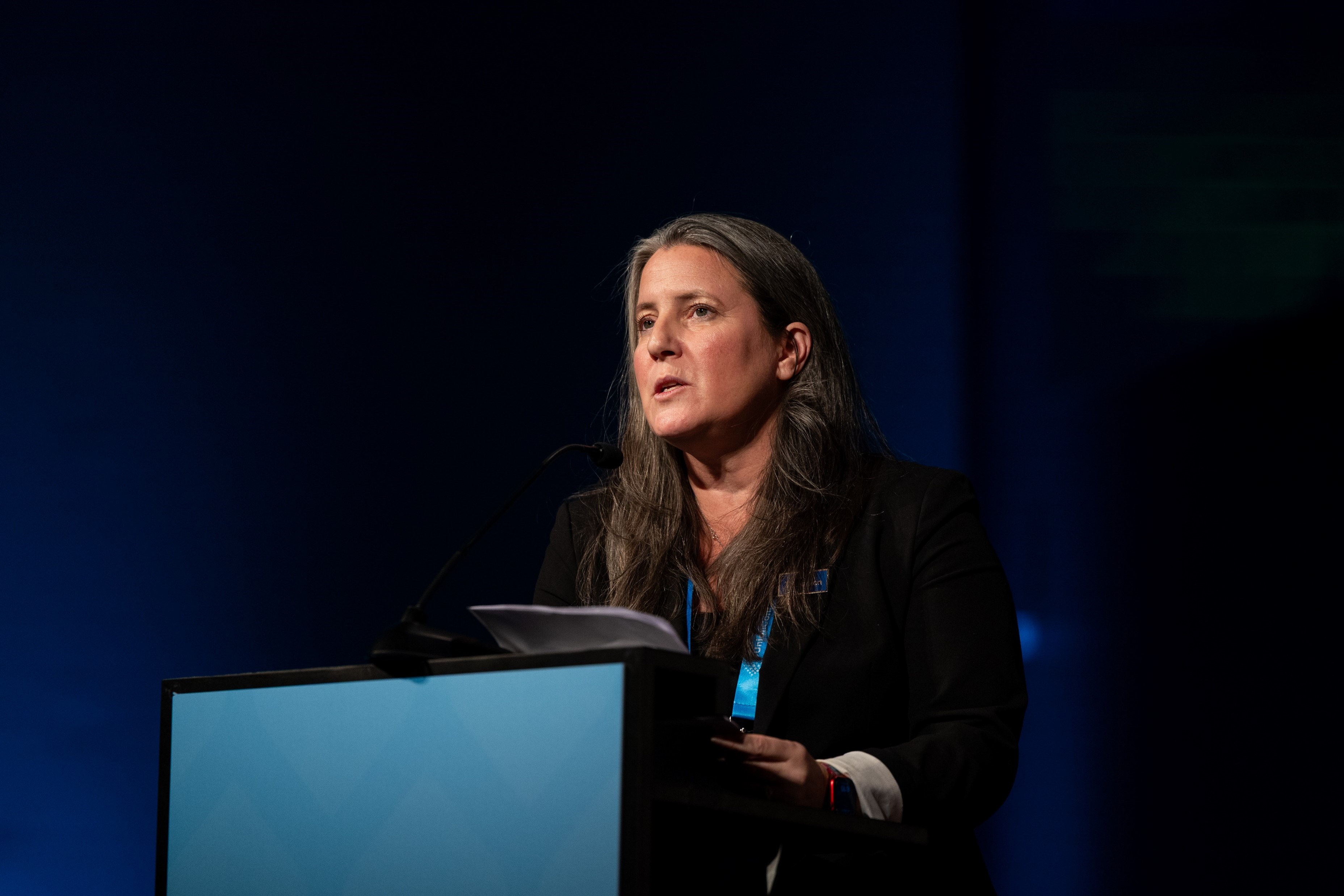
MESSAGE FROM OUR EXECUTIVE DIRECTOR - DR CASSANDRA KELLY-CIRINO
Each year, every World TB Day statement you read will start: “We have the knowledge, tools and skills to treat, cure and prevent tuberculosis (TB), yet over 10 million people still suffer and 1.25 million people die from this ancient disease each year.”
Without taking this as a clear indication that the current approach is not working and that a meaningful shift is needed, you will continue to read this introduction each year – beyond the 2030 and 2035 End TB deadlines. Something must change.
Led by science
Every great breakthrough made in the fight against TB has been testament to our commitment to science, so let’s go back to the basics of what drives TB transmission:
- Every person with TB disease acquires it from someone else with infectious TB.
- Most TB disease results from recent transmission, not remote past reactivation.
- More than half of people with active TB have no symptoms yet remain infectious.
In recognition of these scientific facts, The Union is pushing for the prioritisation of evidence-based interventions that will reduce TB incidence in high-burden settings. Specifically, community-wide screening, linked to effective treatment.
Put simply, if we find and treat everyone with TB, we can stop people being exposed, stop them becoming infected, and stop them infecting others – breaking the chain of TB transmission.
This is not a bold new strategy that we want to take a chance on. History has already shown that it worked in Europe, North America, Japan and Australia during the latter half of the 20th century. Long before portable chest X-rays, rapid molecular diagnostics and shorter treatment regimens. There is no reason why this cannot work again.
Yes, global funding cuts and geopolitical chaos have had a devastating impact on the progress we had already made and caused unforgivable misery. However, we cannot allow this to distract and derail our efforts any further. We must also acknowledge that we were not on track to meet our goal, so let’s take this opportunity to put that right.
A focus on this active, community-wide strategy requires us all (civil society, communities, governments, funders, advocates, researchers, healthcare professionals and beyond) to play our part.
Powered by community
This starts by using our collective power to demand more from our leaders – they must do more to protect us from TB.
In high-income countries it is unacceptable for anyone to be infected with TB. Yet there is a sense of fatalism or inevitability about the spread of TB in low- and middle-income countries. Such inequity must not be tolerated – no one should consider sickness and death due to TB as “normal” – TB is not a fact of life.
The Union calls on world leaders and donors to meet these demands with a greater sense of urgency and significantly invest in evidence-based interventions that will stop TB transmission. That means:
- Working with technical and community experts to implement community-wide screening in high-burden settings
- Providing greater access to the latest innovations in screening, diagnostics and treatment
- Being accountable for achieving a meaningful and sustained reduction in TB incidence. The primary metric for ending TB.
This is the only way to truly fulfil the commitments they made to us, and finally, bring an end to the needless pain and suffering.
As the pathfinder of the lung health community, we are committed to always playing our role as the champion of science, providing communities with a platform to be heard, and advocating for an evidence-based approach to everything we do.