
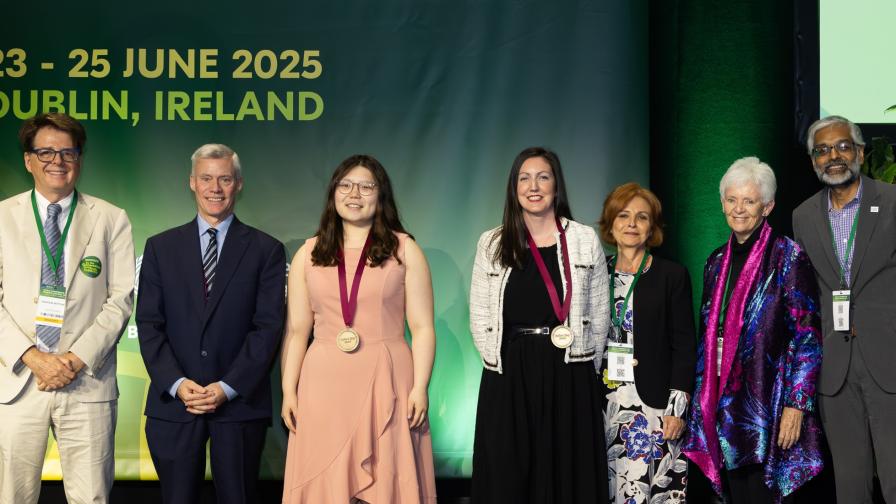
As we mark World No Tobacco Day, recipients of the 2025 Luther L. Terry Awards reflect on the progress made since the World Conference on Tobacco Control 2025 in Dublin, Ireland, and the challenges that continue to shape the future of global tobacco control.
The Luther L. Terry Awards recognise individuals and organisations whose dedication and leadership have made a significant contribution to advancing tobacco control around the world. In 2025, this prestigious honour was awarded to:
- Rob Cunningham, lawyer and Senior Policy Analyst, Canadian Cancer Society – Distinguished Career
- Lisa Lu, CEO of International Youth Tobacco Control – Young Pioneer Awardee (joint)
- Leslie Rae Ferat, Executive Director of Global Alliance for Tobacco Control – Young Pioneer Awardee (joint)
What progress have you seen since the World Conference on Tobacco Control 2025?
For Leslie Rae Ferat, the conference helped build momentum that continues to strengthen the global tobacco control movement.
"The energy in Dublin at the 2025 World Conference on Tobacco Control was a powerful reminder of our collective impact, and we've seen meaningful momentum build from it."
Leslie highlighted the growing influence of youth-led advocacy.
"We are seeing an incredible surge in grassroots momentum, driven by passionate youth engagement. Young advocates are stepping up, demanding accountability, and exposing industry tactics."
She also emphasised the continued importance of the WHO Framework Convention on Tobacco Control (WHO FCTC) for tobacco control efforts worldwide.
"The WHO FCTC remains our foundation; the definitive, evidence-based tool proving that tobacco regulation is essential for human rights and sustainable global development."
Lisa Lu pointed to several initiatives that have built on the momentum generated by the World Conference on Tobacco Control.
Following her Luther Terry Award recognition, Lisa was invited to speak at COP11 in Geneva, where she championed the vital role of young people.
"I emphasized the value of youth voice and encouraged world leaders to listen and incorporate young people in their policy making."
She has also led an advocacy delegation to the Philippines, engaging policymakers, grassroots organisations and students to share tobacco control best practice and raise awareness of the harms of tobacco use. Alongside this, she has continued campaigning against tobacco sponsorship in Formula 1, building on a long-running international effort to encourage stronger action from motorsport governing bodies.
Rob Cunningham highlighted a number of positive policy developments over the past year.
"Encouragingly, there is ongoing progress in global tobacco control. More countries are implementing core measures of tax increases; smoke-free places; advertising, promotion and sponsorship bans; large picture health warnings and plain packaging; and funding increases for government tobacco control budgets. However, progress is not fast enough."
Rob pointed to decisions adopted at COP11 on liability and the environment, and preparations for a new European Union Tobacco Control Directive.
"The 27-member EU has an opportunity to greatly strengthen measures, which can in turn influence other countries in Europe and globally."
He also highlighted the United Kingdom's adoption of tobacco-free generation legislation in April 2026, a landmark measure that received significant international attention.
Together, these examples demonstrate how progress is being driven through advocacy, policy reform, youth leadership and international collaboration across the tobacco control community.
What is the biggest challenge we face, and what will it take to overcome it?
While each award winner identified different priorities, all agreed that sustained commitment and collective action will be essential to overcoming the challenges ahead.
For Leslie, one of the most pressing issues is the lack of funding for tobacco control implementation.
"While tobacco industry interference remains a constant threat, the quieter crisis we do not talk about enough is the severe lack of sustainable, predictable financing for tobacco control.
"Without stable funding, the FCTC cannot be fully implemented where it matters most; at the national and local levels."
Rae called on governments to prioritise domestic resource mobilisation through dedicated health taxes, cost-recovery mechanisms and stronger integration of tobacco control into wider health and development budgets.
"Funding tobacco control isn't an expense; it is a high-yield domestic investment that saves lives, cuts healthcare costs, and raises revenue simultaneously."
Lisa highlighted a different but closely related challenge.
"The biggest challenge we face is the mismatch of resources between advocates and the industry."
She noted that tobacco companies have significant financial resources at their disposal, while advocates often operate with more limited funds.
"Tobacco companies can hire batches of lawyers, analysts, and content creators, but we would almost always run into budget constraints."
For Lisa, the solution lies in mobilising public support and political action.
"If we can convince governments to care and people to vote for stricter policies, then it's not just advocates against the industry; it's all of us against the industry."
Rob identified tobacco industry interference as the greatest challenge facing tobacco control efforts worldwide “as has been the case for decades."
"The industry seeks to weaken, delay and block tobacco control legislation, using lobbyists, front groups and legal challenges, among other tactics."
He warned of the new challenges that nicotine products are now presenting us with.
"Now the industry is marketing newer nicotine product categories that are growing the overall nicotine market, or halting or slowing the decline, in many countries."
Despite these challenges, Cunningham remains optimistic.
"We must maintain our resolve and move forward with determination and effectiveness. It can be done. We know this from history. In country after country, public health has prevailed over commercial interests. And in the years ahead our work again has the opportunity is there to achieve outstanding success and enormous impact."
Looking ahead
Although their perspectives focus on different challenges, Leslie, Lisa and Rob point to the same conclusion: meaningful progress depends on sustained commitment, investment and collaboration.
Whether through empowering young advocates, strengthening implementation of the WHO FCTC, securing sustainable financing, advancing policy reform or building public support for stronger tobacco control measures, the global tobacco control movement continues to push forward in pursuit of a healthier, tobacco-free future.